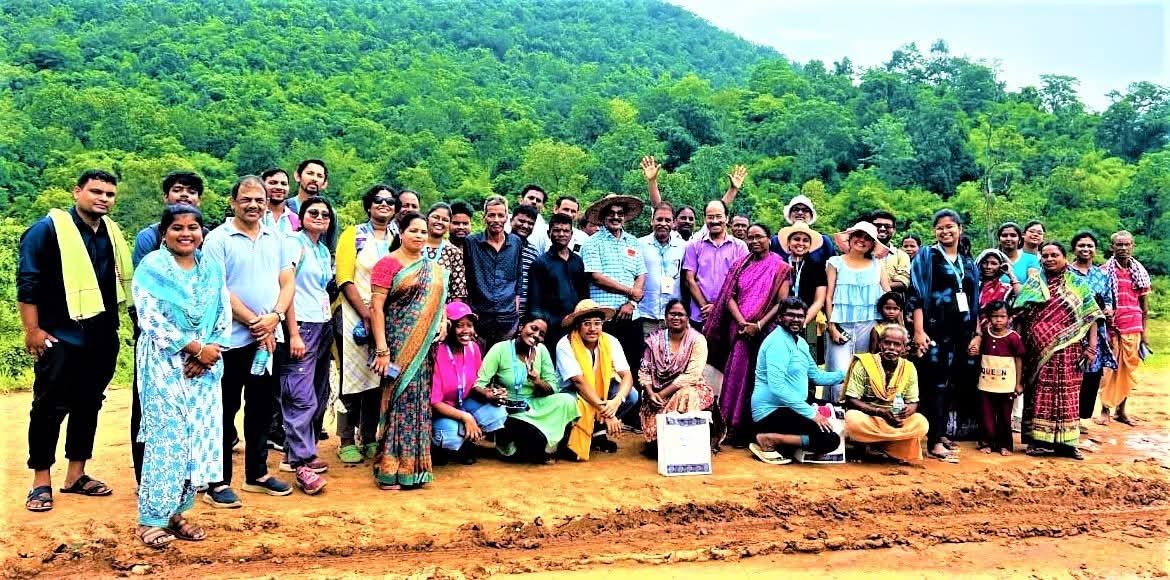

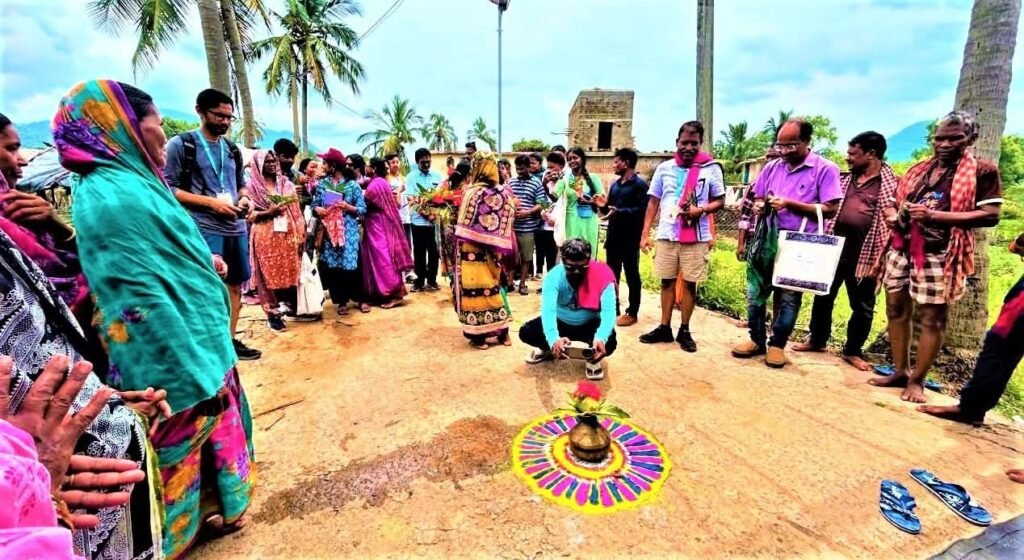
NAYAGARH: Thirty-five students from the University of Waterloo, Canada, and IIT Kharagpur visited Bankataila village in Daspalla block of Nayagarh district to learn about community-led forest conservation, local livelihoods and grassroots governance.
The students were led by Prof. Dr. Prateep Kumar Nayak and Dr. Sisir Kanta Pradhan and accompanied by Mr. Prasant Mohanty, Executive Director of NIRMAN.
During their visit, the students interacted with members of the local community to understand the functioning of the Gram Sabha and its role in strengthening livelihoods through community forest resource management. They also discussed how villagers collectively protect and manage their forests and ensure sustainable use of forest resources.
A major focus of the interaction was the participation of women and youth in forest protection. The villagers explained the traditional practice of Thengapali, through which community members take collective responsibility for protecting forests. They also shared their experiences of preventing and fighting forest fires.
The visiting students were particularly interested in the role played by women in protecting the wider forest ecosystem. Local women narrated how they arrange water sources for wild animals and birds during the hot summer months, helping them survive periods of water scarcity.
The interaction provided the students with an opportunity to understand how community institutions can contribute not only to forest conservation but also to livelihood security and biodiversity protection. Community-led forest protection has a significant presence in Nayagarh, where several villages have historically organised themselves to protect and manage forests.
The students observed that the unity and collective participation of the villagers have played an important role in protecting the forests and their inhabitants. They appreciated the community’s efforts to combine conservation with the needs of local livelihoods.
The visiting group included students from diverse international backgrounds, including Canada, Tanzania, Sri Lanka and Bangladesh, making the exposure visit an important platform for cross-cultural learning and exchange.
Sharing their experiences, the students said that the visit had enriched their understanding of community-based natural resource management. They noted that interacting directly with villagers offered insights that could not be gained solely through classroom-based learning.
The visit also highlighted the importance of bringing together academic institutions, local communities and civil society organisations to understand practical approaches to environmental conservation and sustainable livelihoods.
NIRMAN has been working on environmental justice, natural resource management and community-oriented development in Odisha and has collaborated with the University of Waterloo and IIT Kharagpur on socio-ecological research and field-based learning.