
By Prabin K Padhy
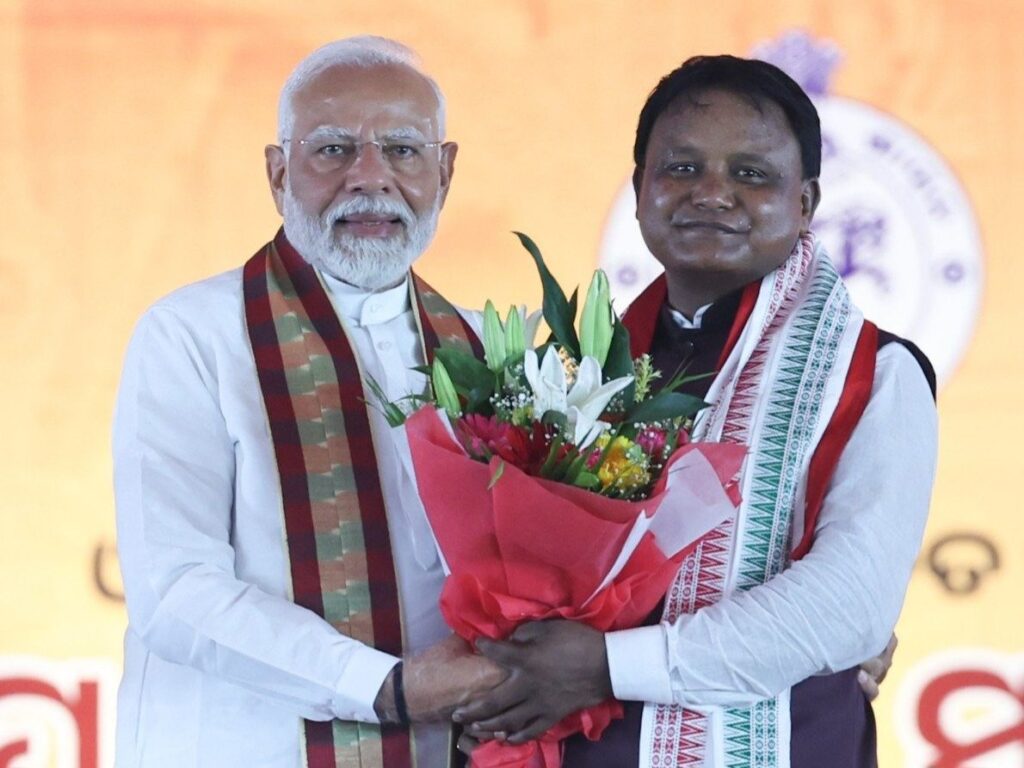
On 12 June 2026, the BJP-led government under Chief Minister Mohan Charan Majhi completes two years in office in Odisha. The significance of this milestone goes beyond a routine political anniversary. For the first time in nearly a quarter century, Odisha witnessed a decisive political transition from the long BJD era to a BJP government aligned ideologically and administratively with the Centre. The rise of the Mohan Majhi government symbolised not merely a change in leadership, but a larger shift in governance style, political narrative, and developmental priorities.
The BJP came to power in Odisha with the promise of “Odia Asmita”, transparent governance, faster industrialisation, welfare delivery, and stronger integration with Prime Minister Narendra Modi’s vision of “Purvoday” — the rise of Eastern India as the next engine of national growth. Two years later, the government’s report card reflects both notable achievements and significant challenges ahead.
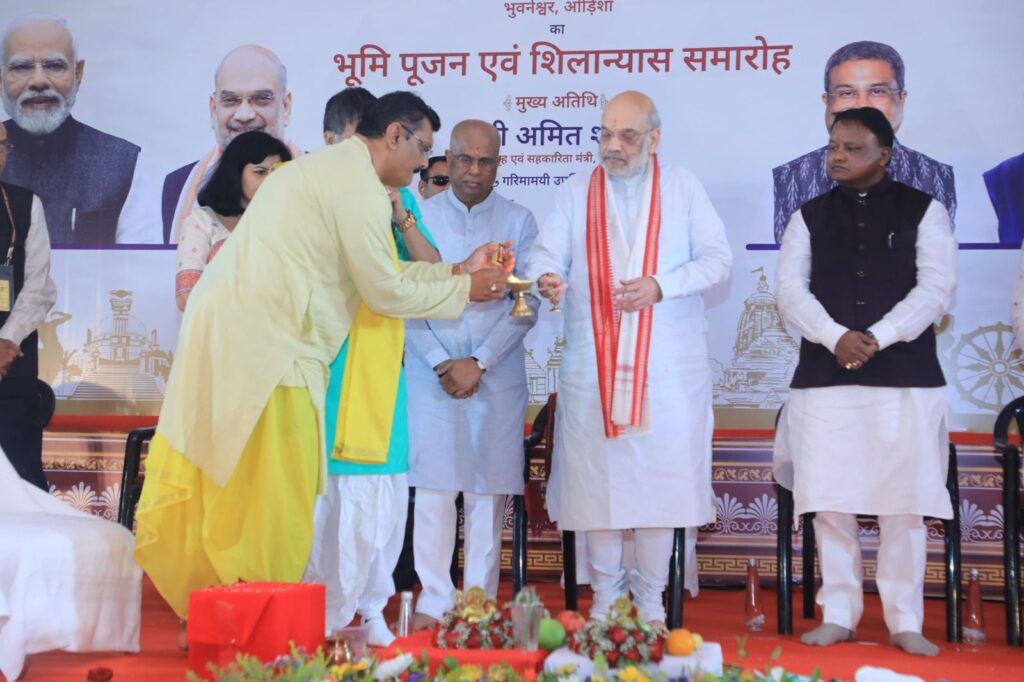
One of the biggest achievements of the Majhi government has been the establishment of a strong “double engine” governance framework. The coordination between Bhubaneswar and New Delhi has accelerated project clearances, infrastructure funding, railway expansion, national highway connectivity, tribal welfare initiatives, and industrial investment proposals. The political friction often visible during the previous regime has largely been replaced by cooperative federalism.
Economically, the government has attempted to position Odisha as an industrial and investment destination. The administration aggressively pursued investment outreach programmes across states such as Gujarat and Maharashtra to attract manufacturing, downstream metal industries,
petrochemicals, textiles, electronics, and semiconductor-related investments. The state government has consistently highlighted Odisha’s mineral strength, port advantage, and strategic eastern coastline as key drivers for future industrial growth.
Infrastructure development has also received significant attention. Roads, logistics corridors, railway connectivity, urban infrastructure, and industrial clusters have become central themes of the government’s developmental agenda. The focus on industrial grounding rather than merely signing Memorandums of Understanding indicates an attempt to move Odisha from a resource-exporting economy toward a manufacturing and value-addition economy.
The agriculture sector, which remains the backbone of Odisha’s rural economy, has seen renewed policy attention. Budgetary focus on irrigation, farmer support, procurement reforms, and rural infrastructure has increased substantially. The government has tried to create a narrative of “Samruddha Krushi Odisha” by linking agriculture with rural entrepreneurship, food processing, and tribal livelihood programmes.
Women empowerment has emerged as another major pillar of the Majhi government. The Subhadra Yojana became one of the BJP government’s flagship welfare initiatives, directly transferring financial support to women beneficiaries across the state. Politically, the scheme helped BJP strengthen its social base among women voters, while administratively it demonstrated the government’s emphasis on Direct Benefit Transfer mechanisms similar to central welfare models.
The government has also attempted to strengthen tribal outreach, which carries both social and political significance. With Mohan Charan Majhi himself emerging from a tribal background, the BJP has sought to project Odisha’s tribal communities not merely as beneficiaries but as active stakeholders in governance and development. This aligns closely with the BJP’s broader national tribal outreach strategy.
In education and skill development, the government articulated an ambitious vision of transforming Odisha into India’s “Knowledge Capital.” The push for modern schools, implementation of the National Education Policy, reservation measures for SEBC students in higher education, and emphasis on technical education in Odia language reflect an effort to create a long-term human capital strategy. Simultaneously, skill development and employment generation have become critical policy themes as Odisha seeks to prepare its youth for industrial expansion.
Another notable shift has been in governance style. The Majhi government has consciously projected simplicity, administrative accessibility, and austerity. Recent measures such as reducing official convoys, encouraging virtual meetings, and promoting electric vehicles in government use were symbolically important in presenting a governance model focused on efficiency and accountability.
However, despite these achievements, major challenges remain…
The first and perhaps the most critical challenge is employment generation. Odisha’s youth population continues to face significant pressure due to limited high-quality private sector jobs. While investment announcements are encouraging, the real test will be whether these projects create sustainable employment opportunities within the state rather than only industrial output.
The second challenge is balancing industrialisation with environmental sustainability and tribal rights. Odisha’s mineral-rich districts are ecologically sensitive and socially complex. Land acquisition, displacement concerns, mining-related environmental issues, and forest rights remain politically sensitive matters. The government will need to ensure that industrial expansion does not create social unrest or deepen regional inequalities.
Third, healthcare and education delivery in rural and tribal areas still require structural improvement. Despite policy announcements and increased allocations, implementation gaps continue to exist in many districts. Governance efficiency at the grassroots level will determine whether welfare benefits truly reach intended populations.
Law and order management is another area under scrutiny. The government has repeatedly emphasised stronger policing and administrative accountability. As urbanisation and industrialisation expand, maintaining social stability and administrative responsiveness will become increasingly important.
Politically, the BJP government also faces the challenge of sustaining momentum after the emotional and ideological high of defeating a 24-year-old regime. Governance expectations are now significantly higher. The electorate will increasingly judge the government not merely on promises or symbolism, but on measurable outcomes in jobs, income growth, infrastructure quality, and public services.
Yet, the broader strategic importance of Odisha in India’s future growth story cannot be ignored. Prime Minister Narendra Modi’s “Purvoday” vision seeks to transform Eastern India into a new growth corridor balancing India’s historically western-centric economic development. Odisha, with its ports, minerals, coastline, energy resources, tribal heritage, and young workforce, is central to this vision.
The next decade could therefore become transformational for Odisha if industrialisation, infrastructure, skill development, digital governance, and welfare delivery move together in a balanced manner. The BJP government’s attempt is clearly to position Odisha not as a peripheral state dependent on central grants, but as a major contributor to India’s economic rise.
Two years into office, the Mohan Charan Majhi government has successfully created the foundation of a new political and developmental narrative in Odisha. Whether this foundation evolves into a durable model of inclusive growth will depend on implementation, administrative efficiency, and the ability to convert investment promises into visible improvements in the daily lives of ordinary Odias.
The journey from political change to structural transformation has begun. The coming years will determine whether Odisha truly emerges as the driving force of India’s eastern renaissance under the vision of “Purvoday.”

- Management Consultant
- Bhubaneswar, Odisha
- Cell: +91-7008470905