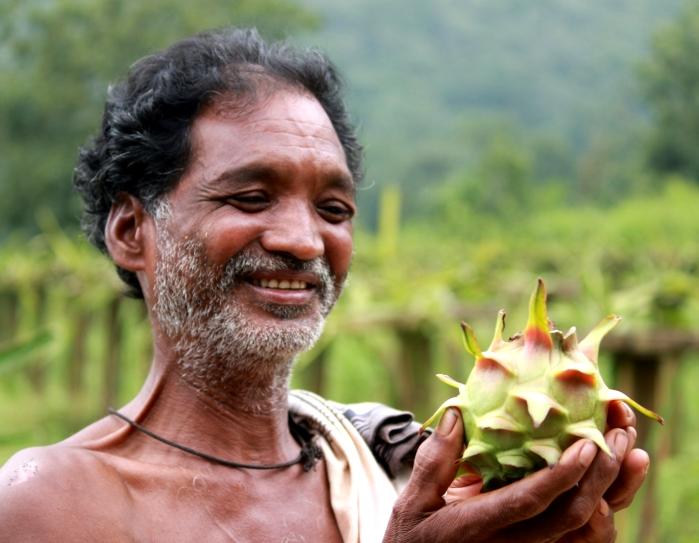

Dragon fruit, a high-value and energy-rich fruit, has emerged as a powerful driver of sustainable livelihoods in Bedaketa village of Kandhamal district, Odisha. Known for its strong market demand and nutritional value, dragon fruit was traditionally cultivated in countries such as Mexico, Guatemala, and Costa Rica. Today, it is grown across the world due to its commercial viability and resilience. As a cactus fruit rich in carbohydrates and energy, 100 grams of dragon fruit provides approximately 15% carbohydrates and 57 kilocalories, making it highly sought after by health-conscious consumers. With market prices ranging between Rs 200 and Rs300 per kilogram, dragon fruit has proven to be a profitable crop.
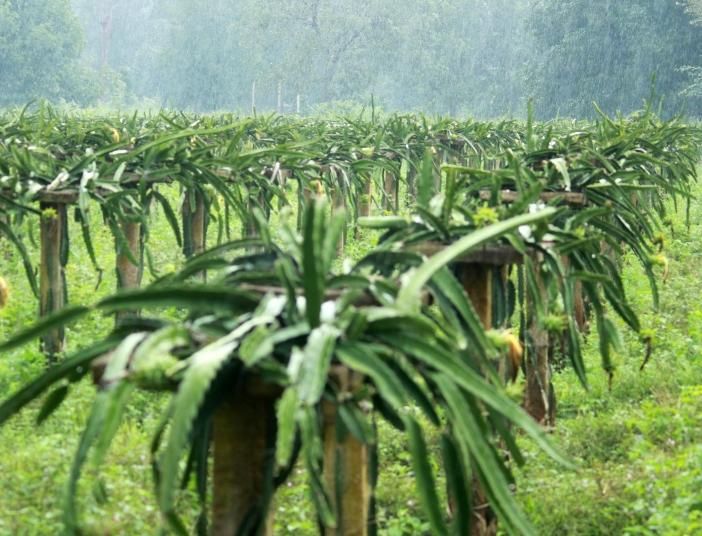
Until recently, dragon fruit cultivation was virtually absent in Kandhamal district. This changed decisively with the intervention of the Mukhyamantri Janajati Jeevika Mission (MMJJM) through Integrated Tribal Development Agency (ITDA), which introduced the crop to local tribal farmers. As a result, farmers are now earning substantial incomes while simultaneously creating sustained market demand within the district.
The Remote Village Gains a Distinct Identity
Bedaketa, a small Kondh tribal village under Sadingia Panchayat of Phiringia Block, was once an obscure interior settlement. Today, it stands out as a model village for high-value horticulture. Eight farming families are cultivating dragon fruit on five acres of land located near the forest fringe and collectively earning more than Rs10 lakh annually. Their success has transformed the village into a learning hub, attracting farmers from across states, along with regular visits from the District Collector, district agriculture officials, ITDA personnel, and representatives of development institutions. Bedaketa is now widely recognized for its pioneering role in dragon fruit cultivation.
From Fallow Land to Productive Assets
The initiative began in 2021, as the impact of the COVID-19 pandemic began to ease. ITDA officials from Phulbani introduced a proposal for dragon fruit cultivation after identifying over five acres of contiguous upland owned by families such as Kaindhar, Belara, Baidyanath, Udayanath, and Sunam. Located 1.5 km from the village near the forest edge, this land remained largely uncultivated due to lack of irrigation, financial constraints, and perceived risks. Despite the presence of the Bagha stream nearby, farmers were unable to access water for irrigation.
Recognizing the potential of this unused land, ITDA and implementing agency SWATI strongly advocated for dragon fruit cultivation, assuring farmers of end-to-end support—including technical training, inputs, irrigation infrastructure, and assured market linkage. Although the crop was entirely new to the villagers and initially met with skepticism, the assurance of institutional support and the opportunity to productively utilize fallow land led the farmers to commit.
Strategic Planning and Infrastructure Support
Farmers were taken on an exposure visit to Sunapanga village in Chakapad Block to observe successful dragon fruit cultivation firsthand. Subsequently, ITDA provided cement poles and saplings. A total of 2,500 cement poles were installed across five acres, with four saplings planted per pole. Farmers received hands-on training in crop management, manuring, and pest control, including measures to prevent termite infestation.
To address water scarcity, ITDA facilitated the implementation of a lift irrigation project under the MRLIP scheme through the Odisha Lift Irrigation Corporation, drawing water from the Bagha River. Drip irrigation systems and electricity connections were established, and the entire plot was fenced for protection. With assured irrigation and security, farmers adopted intercropping with vegetables and flowers, maximizing land productivity.
Within a year, the plants began bearing fruit. Though yields were modest in the first year, the successful harvest boosted farmer confidence and commitment. Recognizing the long-term potential, ITDA— in coordination with the Horticulture Department—constructed a pack house to support storage, crop protection, and farm operations.
Sustainable Returns and Growing Prosperity
Farmers cultivate both red- and white-fleshed dragon fruit varieties. From the second year onward, yields increased significantly and continue to rise. According to farmer Belara Kahnar, dragon fruit plants remain productive for nearly 35 years with minimal recurring costs. Annual manuring, periodic weeding, and limited irrigation during summer are sufficient for maintenance. The crop requires no irrigation during the rainy season and yields fruit five times annually between May and November.
In the previous year, four farmers harvested approximately 32 quintals of fruit—averaging 8 quintals per farmer. Sold at ₹150 per kilogram, each farmer earned about Rs1.2 lakh. With increasing plant maturity, farmers expect annual incomes to reach up to Rs 3 lakh per household. Current maintenance costs are modest—around Rs10,000 per acre annually for inputs and labor. Additionally, intercropping with vegetables and marigold flowers generates up to ₹50,000 per family each year.
Market Confidence and Livelihood Security
Farmers face no difficulty in marketing their produce. Traders from Gochhapada, Baliguda, Phulbani, and Berhampur purchase directly from the fields. Local demand from CRPF camps, medical staff, and nearby communities further strengthens sales. Farmers are now planning to expand into sapling production as an additional income stream.
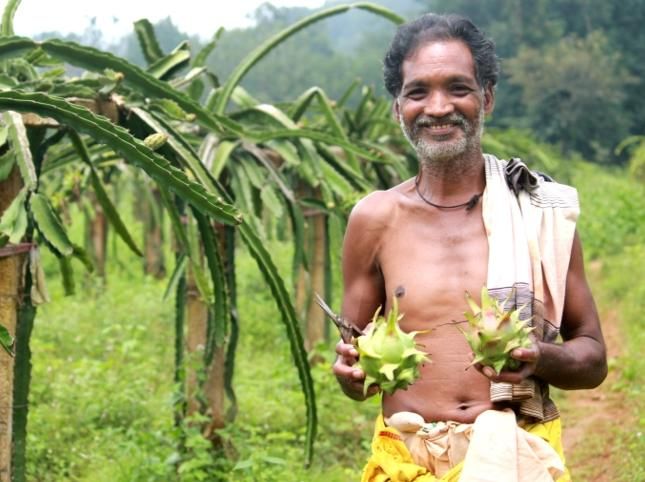
Farmer Kaindhar emphasizes that dragon fruit cultivation has provided his family with a stable and dignified livelihood. Land that was once abandoned has become the primary source of household income, ensuring long-term economic security.
Recognition and Replication Potential
Dragon fruit cultivation has elevated Bedaketa’s farmers to the status of progressive agricultural leaders. Their success has been widely covered by print and electronic media. Farmers from across Odisha and other states regularly visit the village, and senior district officials acknowledge their achievements. For rural tribal farmers, this recognition represents a landmark accomplishment.
The farmers express deep gratitude to the Project Administrator and officials of the Phulbani ITDA and workers of field implanting agency SWATI, whose vision, technical guidance, and sustained support made this transformation possible.